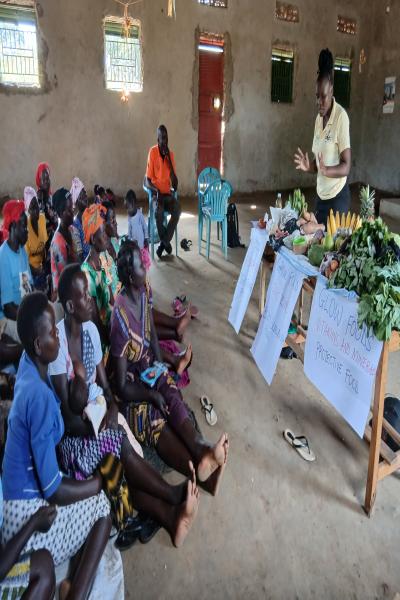
Malnutrition remains a significant public health and development challenge in Uganda, particularly
among Children under five years and women of child-bearing age (15–49 years) in Uganda continue
to face significant nutrition challenges despite gradual national improvements. About one in four
children under five are stunted, particularly in rural and hard-to-reach areas, reflecting chronic
deficiencies in diet, care practices, and health services. Wasting and underweight persist, driven by
food insecurity, disease, poor infant and young child feeding practices, and limited dietary diversity.
Women of reproductive age are highly affected by anaemia and micronutrient deficiencies due to
inadequate diets, poverty, heavy workloads, frequent pregnancies, and restricted access to quality
nutrition and health services, contributing to poor birth outcomes and intergenerational malnutrition.
These challenges are compounded by household food insecurity, low agricultural productivity,
climate shocks, inadequate WASH, and gender norms that disadvantage women and girls. The
strategy therefore focuses on improving household production of diverse, nutrient-dense foods while
expanding access to nutrition-specific services for children, women, and other vulnerable groups.